
English
Odyssey Movie Filming Locations: Plan Your Family Trip to Nolan’s Messenia

May
By Eleni Fotiou, co-founder of MAMAKITA and Senior Family Travel Specialist for Greece & Italy
The first time I read the Odyssey as an adult, I was sitting under the shade of an olive tree at my grandfather’s olive grove in Messenia. The words seemed to shimmer in the afternoon heat, and when I looked far, I could see the same golden coastline where Telemachus disembarked from his ship to seek news of his father at King Nestor’s palace. Now, with Christopher Nolan’s “Odyssey” bringing this ancient epic to screens worldwide, I find myself thinking about what it means to truly experience this place—not as tourists chasing filming locations, but as travelers seeking to understand why these landscapes have inspired stories for three thousand years.
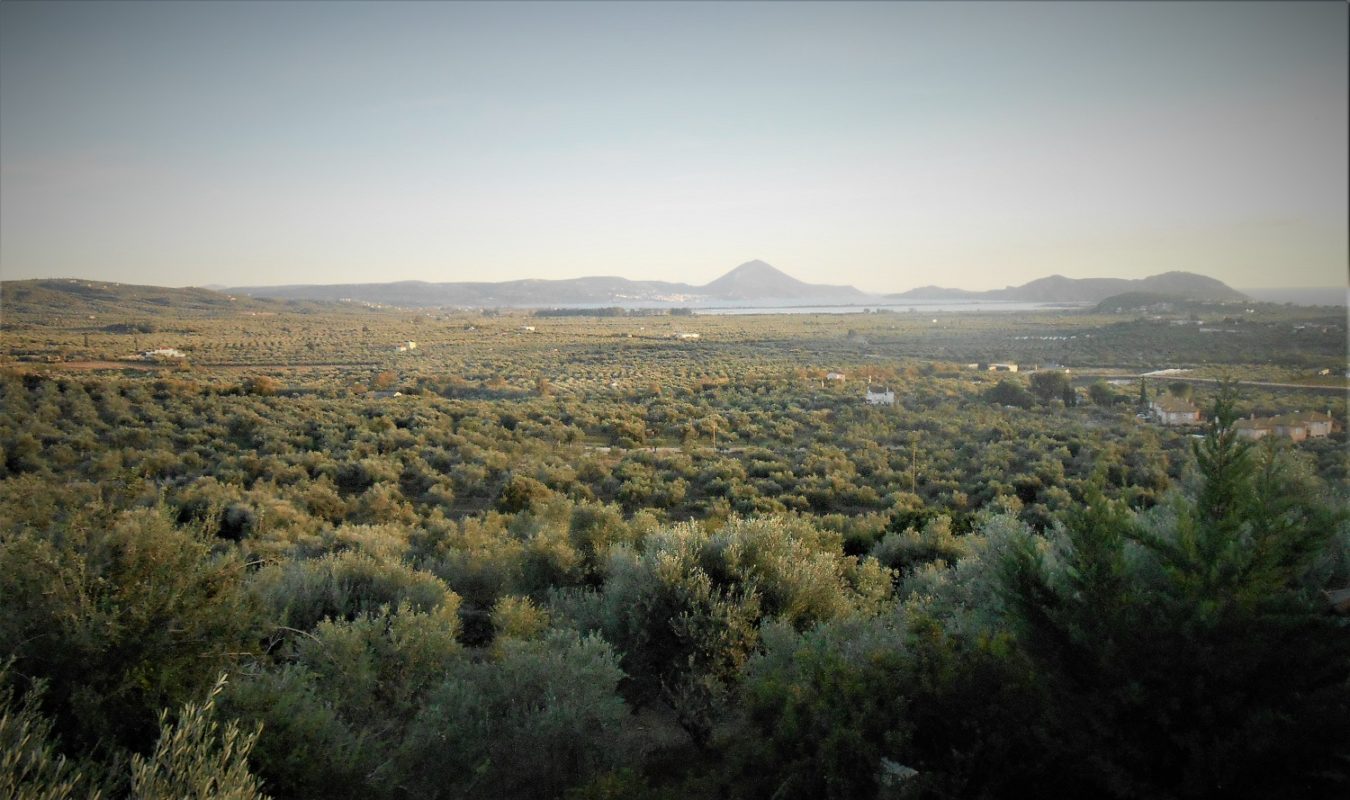
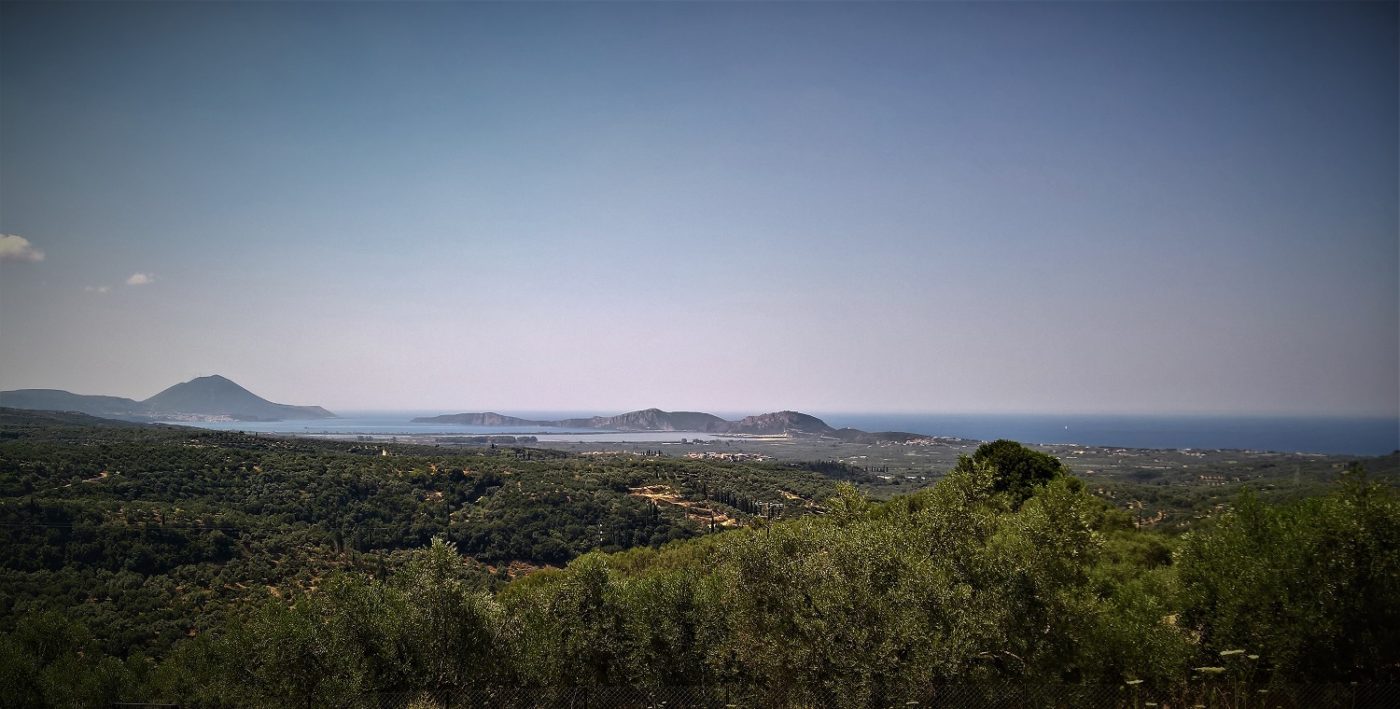
Messenia, my homeland, has the color of silver. The best place to take it all in is from Nestor’s Palace, where your eye sweeps across the entire plain of olive groves stretching to Paleokastro. There, the water plays its own games—seeping into Gialova Lagoon, then filling Navarino Bay, all the way to where Sfaktiria Island meets, in the distance, the Niokastro fortress. Before you, spreads the golden beach, and beyond, the Ionian with the deepest waters of the Mediterranean. This is where I leave my heart every summer: in the silver of the olive, the gold of the sand, and the deep blue of the Mediterranean Sea.
Here I am now, decades after first reading those epic verses, watching my own children discover these same landscapes. As someone who grew up swimming in these waters and knows every cove and castle, I want to share what makes Messenia extraordinary—not the Instagram moments, but the quiet encounters that stay with you. The way light falls through olive leaves. The scent of fresh extra virgin olive oil in fall. The delicate smell of olive tree flowers in spring. The thorough discussions about olive oil production that locals engage in throughout the year—conversations where people become remarkably specific about taste, using a rich vocabulary that reveals how deeply the olive is woven into our identity.



Where Myth Walks Beside You: Nestor’s Palace and Voidokilia Beach
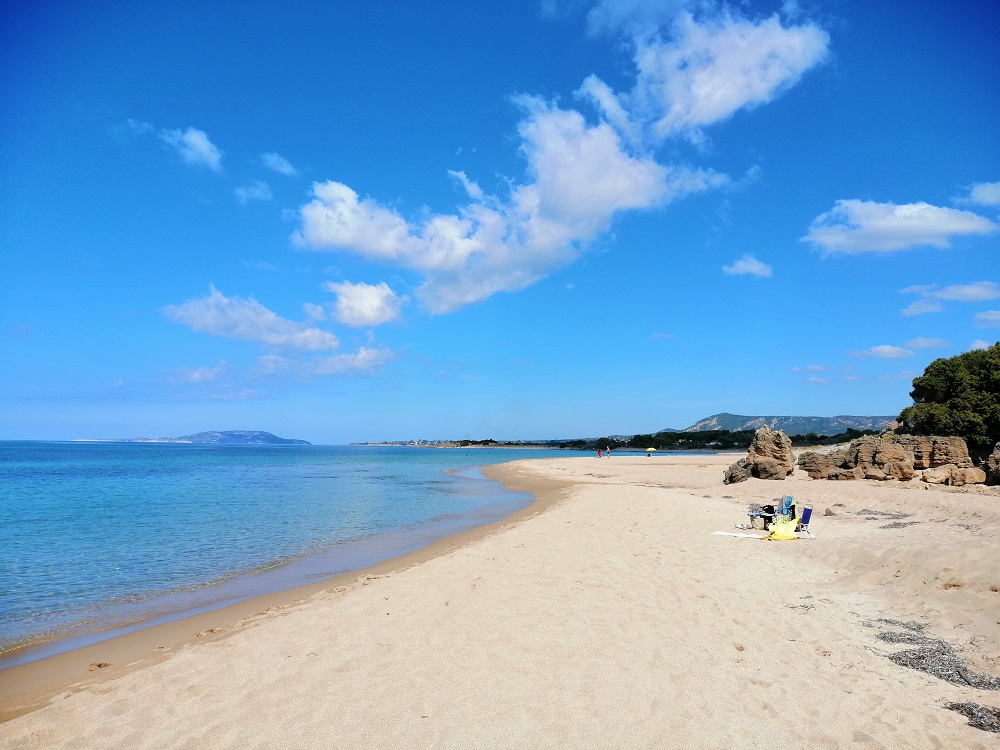
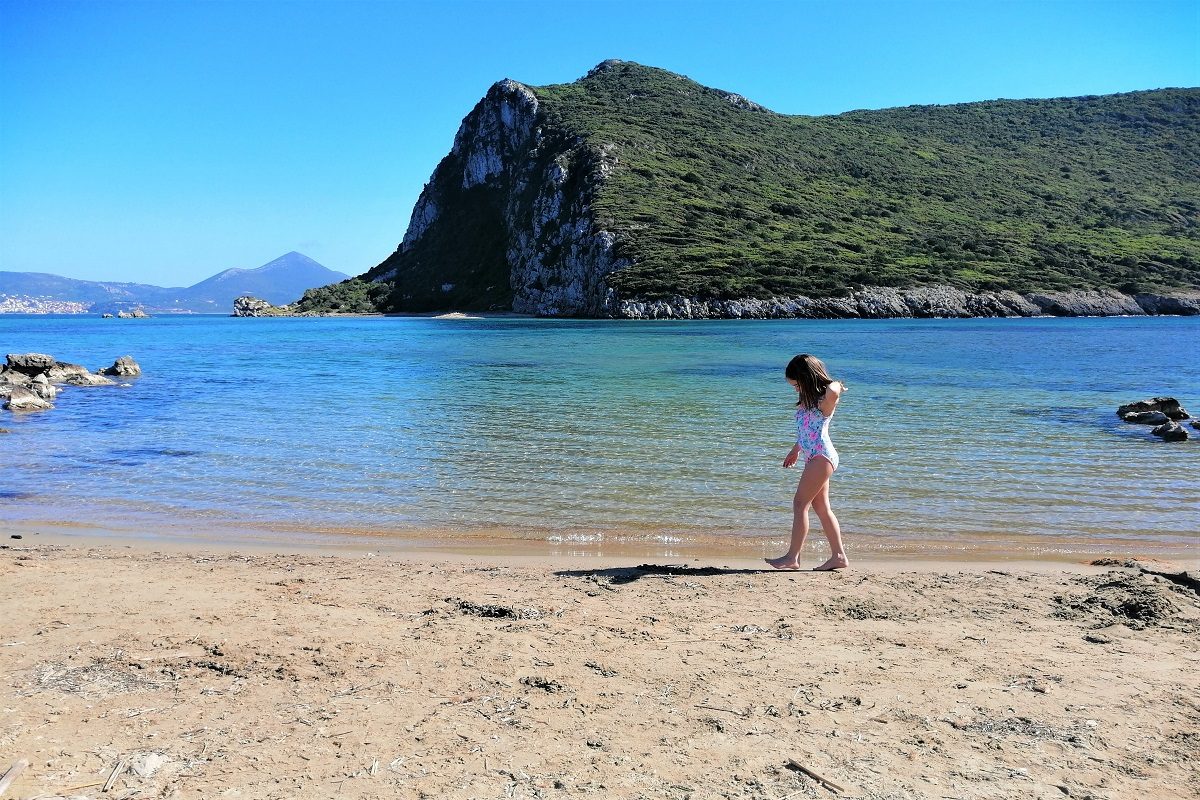
Voidokilia Beach, this crescent of golden sand and turquoise water holds something beyond beauty. The beach curves like a perfect omega symbol, protected by rolling dunes that seem to glow at sunset. “It looks like a moon!” my oldest daughter said the first time we brought her here, and she wasn’t wrong—the Greek name itself means “ox belly,” describing that rounded, sheltering shape.
Voidokilia is a Natura 2000 protected zone, which means what you see is what it has been for centuries—no development, no facilities, just sand and sea. This protection is precious, and it asks visitors something in return: bring everything in, take everything out. Pack water, umbrellas, snacks.
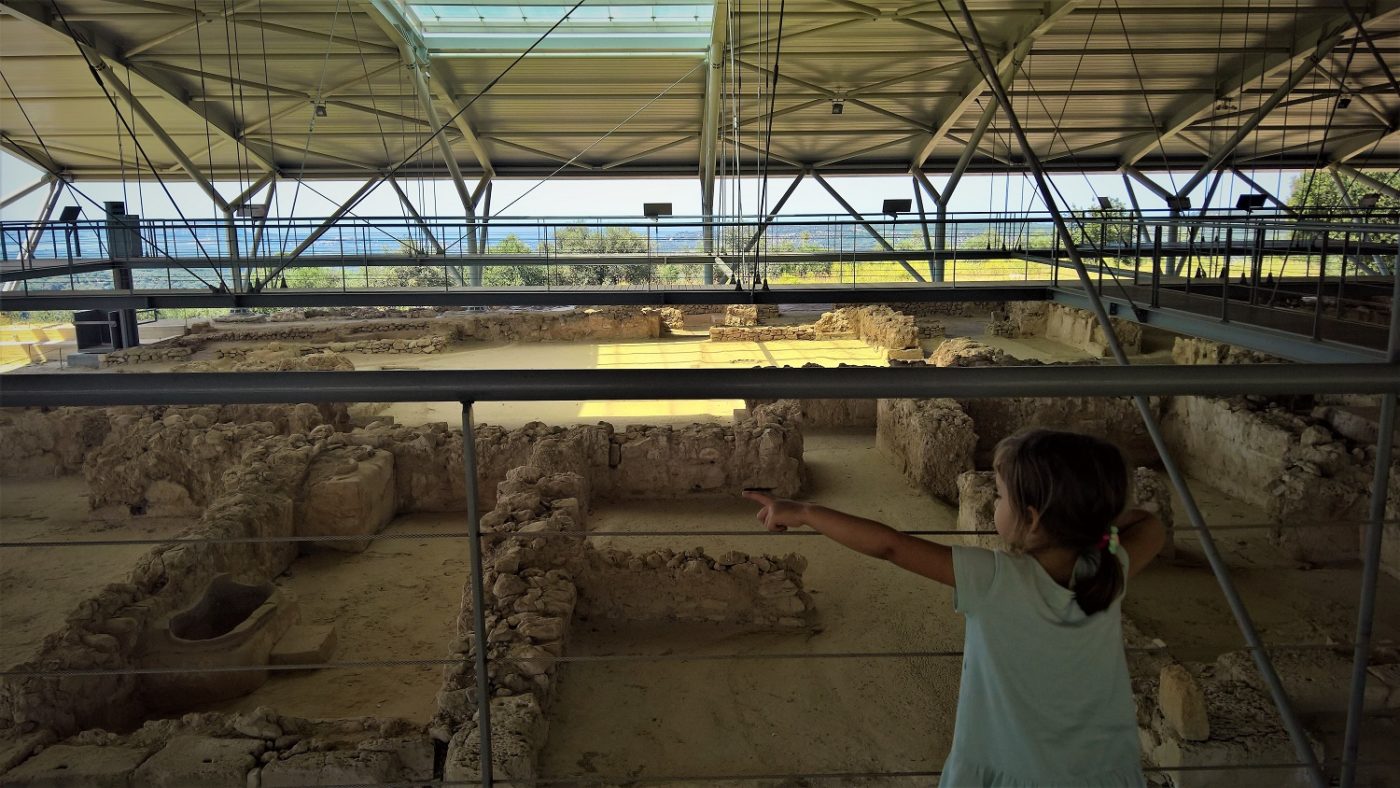
Nestor’s Palace sits just 8 km away—the best-preserved Mycenaean palace in Greece. Walking through the throne room where Telemachus sought his father isn’t about ticking off a famous site. It’s about running your hands along stone walls that witnessed Bronze Age ceremonies, standing where Homer’s characters might have stood, feeling the weight of time collapse between then and now.


Sandy Pylos: Where Homer’s Coast Lives On
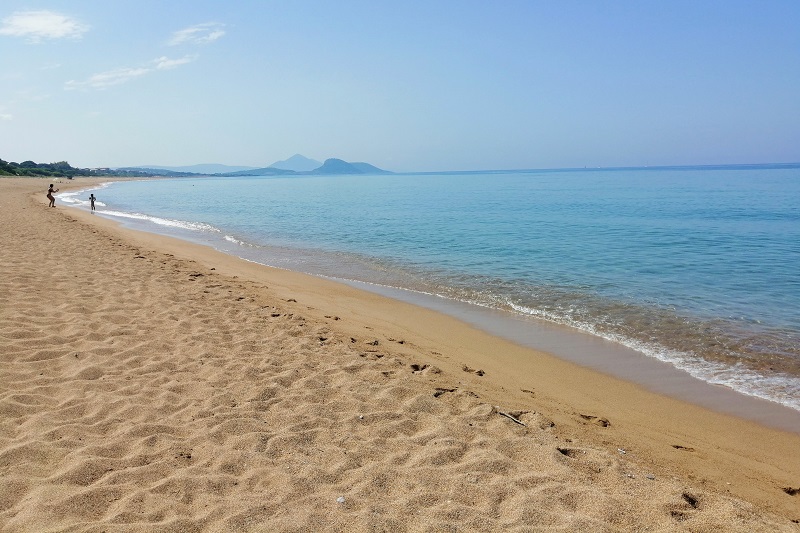
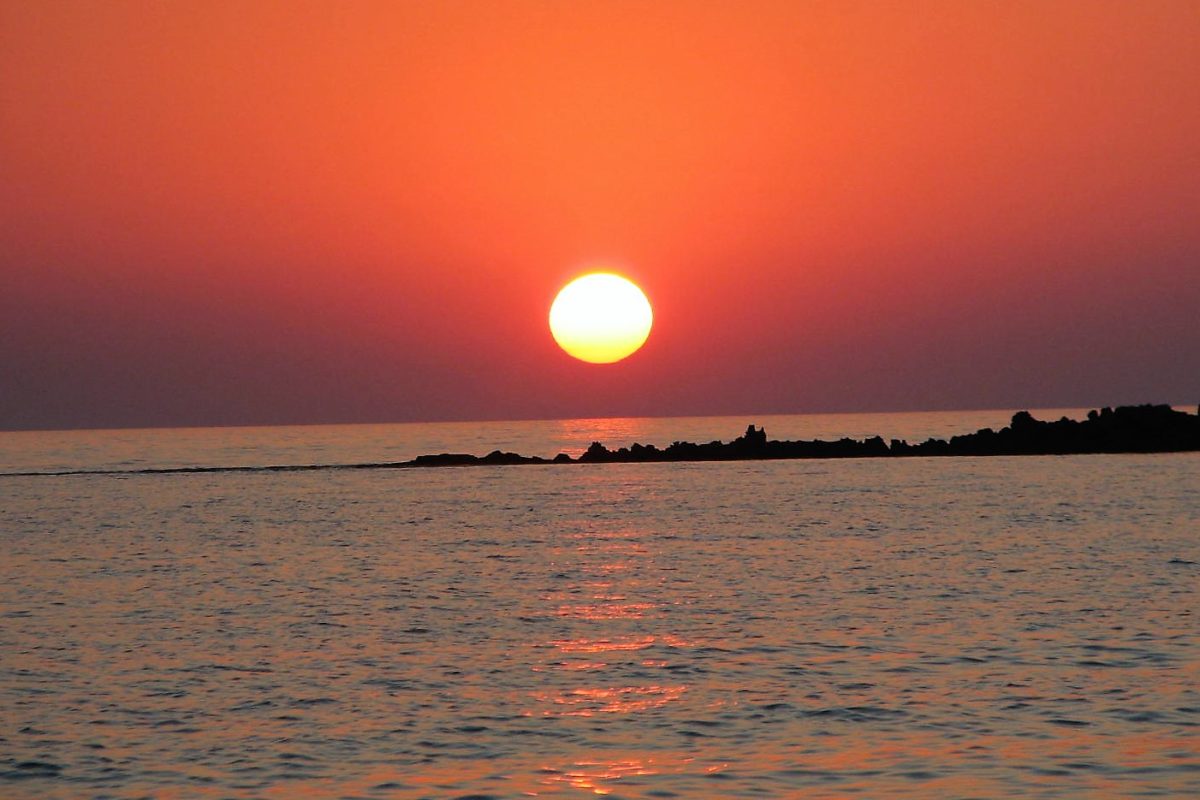
Homer called this stretch “Sandy Pylos,” and three thousand years later, that description still fits. Romanos Bay unfolds in long ribbon of soft sand, facing sunsets that paint the Ionian in shades of amber and rose. This bay is a protected sea turtle habitat—if you’re patient and quiet, you might spot a loggerhead surfacing offshore, come to nest on these same shores where they’ve nested for millennia.
For calmer waters when the wind picks up, inside the Gulf of Navarino, the Golden Beach (Divari) offers sandy shallows where children can play safely at the edge where waves meet shore. My own kids spent an entire afternoon building an elaborate sand kingdom here while I dozed under an umbrella—the kind of unscheduled, unhurried afternoon this coast makes possible.


Into the Water: Moving at the Sea’s Pace
Growing up here, I spent summers in and on the water tracing the best guides and most fun family-friendly experiences available in the area:
Stand-up paddleboarding at Voidokilia introduces you gently to these waters. You’ll learn techniques, paddle around that famous crescent, then explore a nearby cove where rocky walls create natural snorkeling spots. There’s usually a picnic involved—bread, local cheese, sun-dried tomatoes, olives—eaten while sitting on your board with feet dangling in cool water.
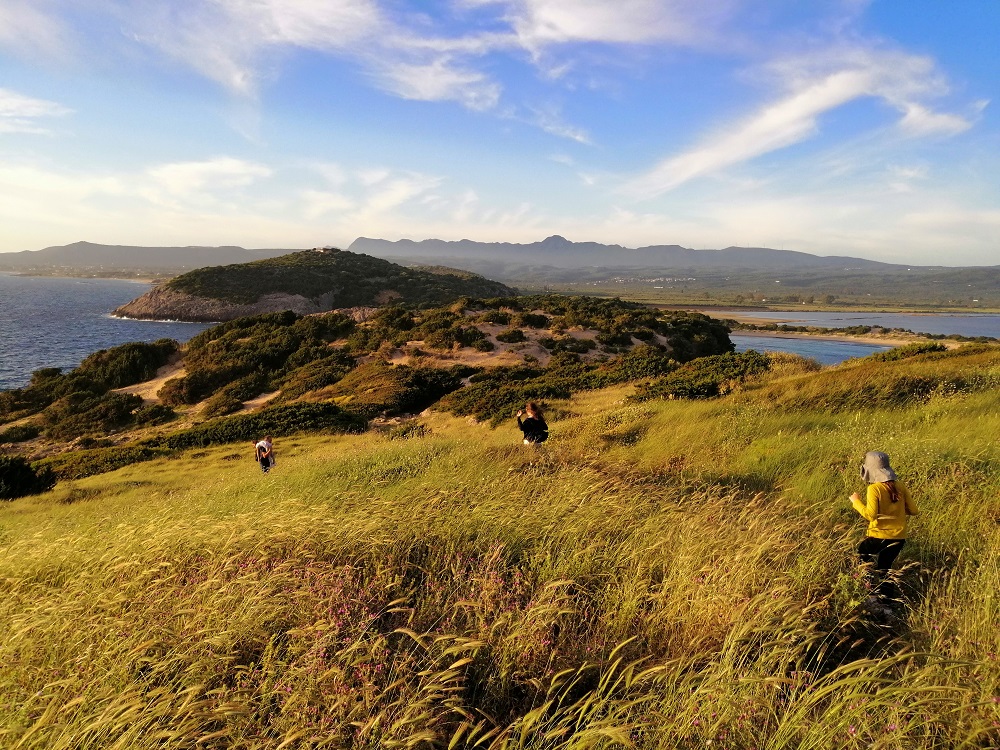
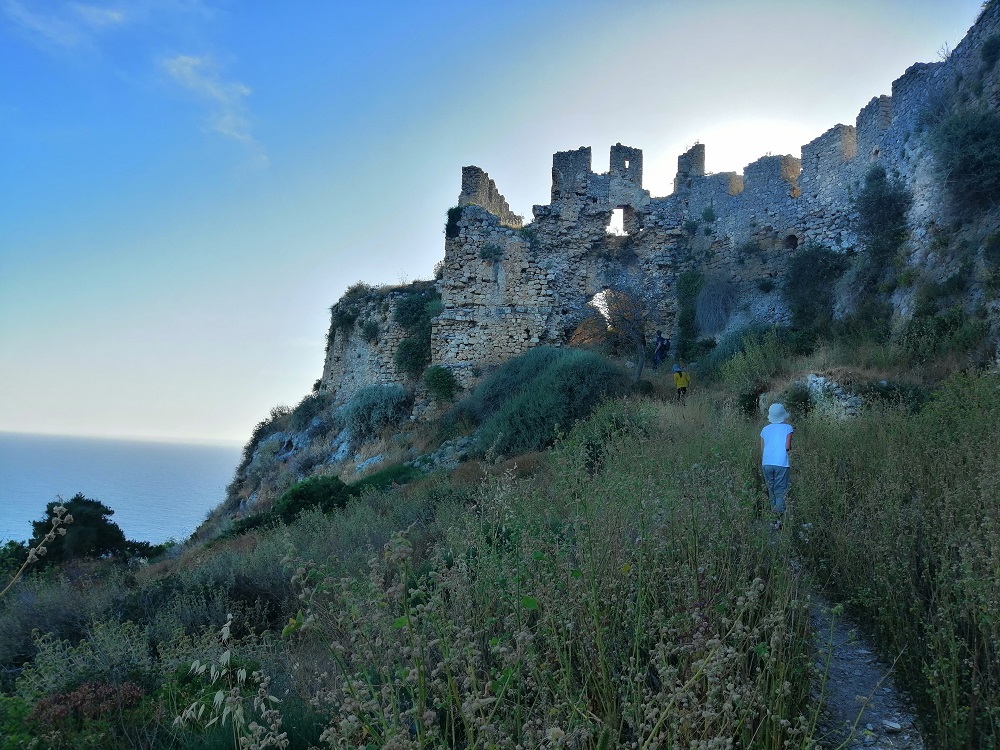
The hike and swim around Navarino combines walking with rewards, particularly beautiful in spring and fall when temperatures are mild. Start at Divari Beach in cool morning air, follow the lagoon path where—depending on the season—herons stand like statues and flamingos gather in unexpected pink clusters. Swim at Voidokilia to cool off, then hike uphill to Paleokastro fort through King Nestor’s Cave. The medieval castle at the top offers views across the entire bay.
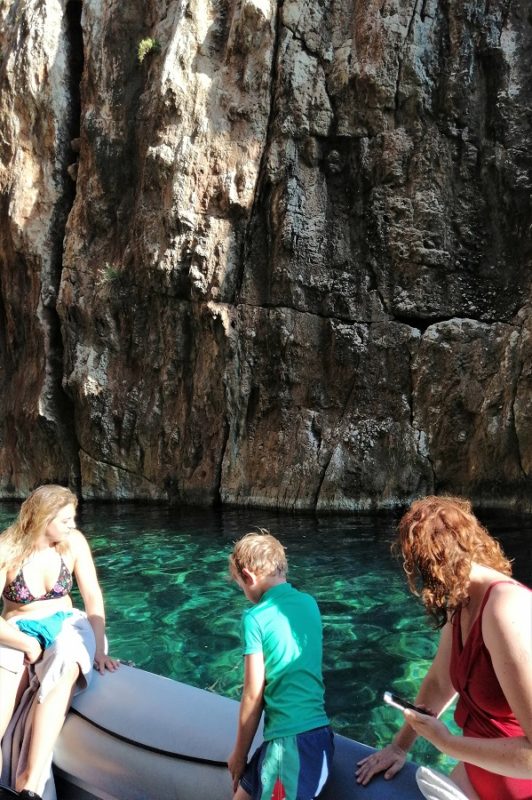
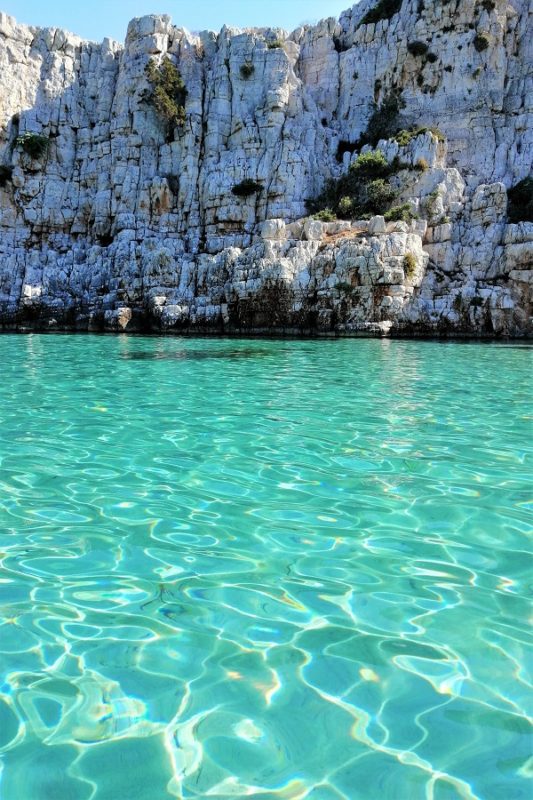
Sea kayaking through Navarino Gulf reveals what the shoreline keeps hidden. You’ll paddle past Niokastro castle’s imposing walls, explore the rock arch at Tsihli Baba, discover sea caves accessible only by water. Guides here know where seals sometimes sun themselves, where sea turtles surface to breathe, where the Battle of Navarino left ships on the seafloor that you can peer down at through impossibly clear water.
An e-bike tour around Gialova Lagoon offers movement without exhaustion—electric assist means even tentative cyclists can glide through wetland paths where 270 bird species gather. The route ends at Voidokilia for a swim, because here, most journeys eventually lead to water.



Living With the Olive: Understanding What Sustains This Place
Here in Messenia, our economy, our cuisine, our very identity revolves around the silvery olive groves that shimmer across every hillside.
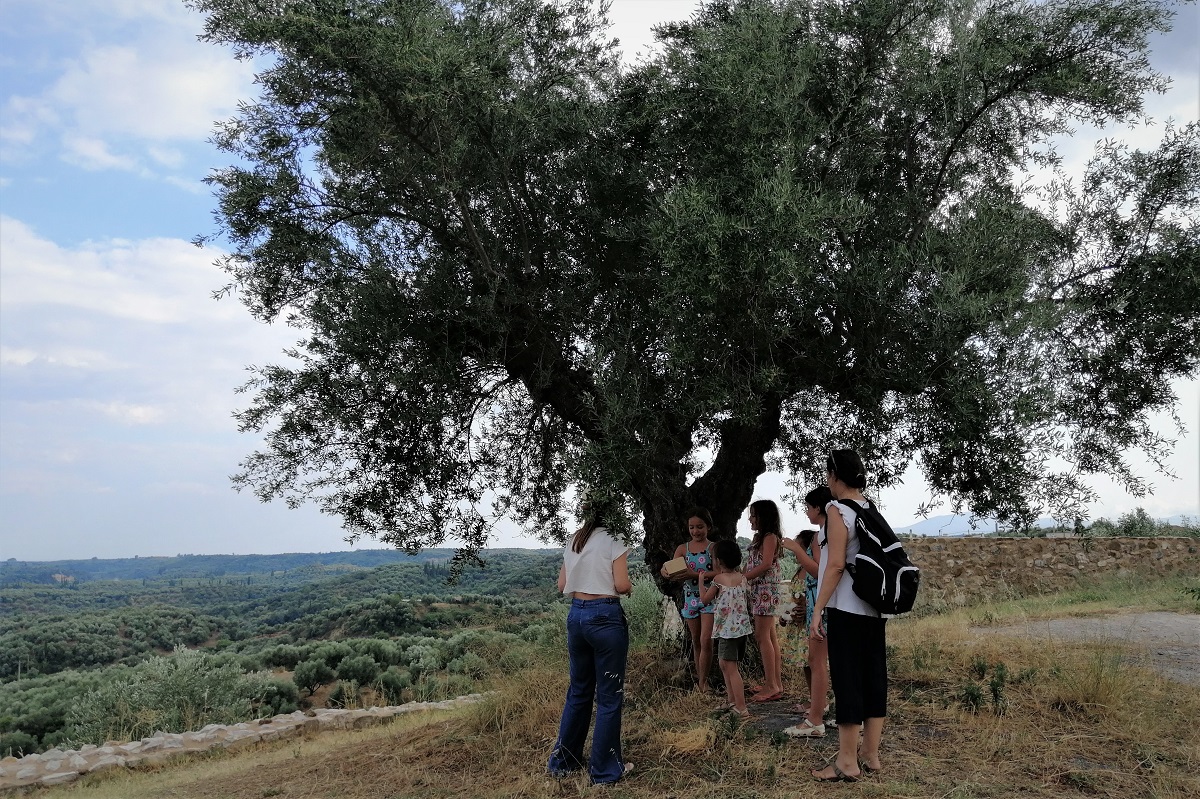
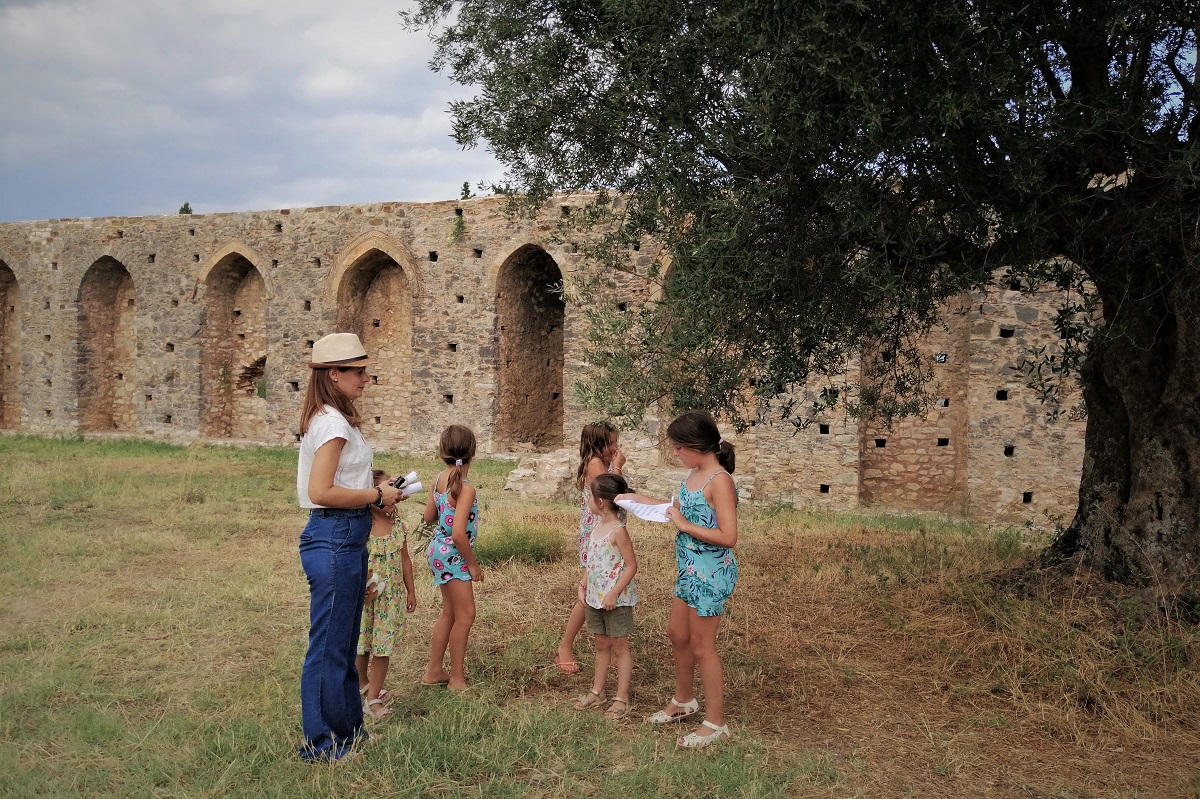
Some experiences invite you into this world as participants rather than spectators. An olive oil tasting and treasure hunt through 13th-century Androussa castle ruins leads into olive groves where you’ll play games that teach tree history, touch bark that might be a century old, understand how a single tree feeds families for generations. The visit to a century-old olive mill shows where this liquid gold is born, and tastings pair extra virgin olive oil with regional foods—Kalamata olives, tzatziki, local cheeses, bread for soaking up that green-gold oil.
The traditional cooking class in Korifasio village takes this further. You’ll walk groves with someone who tends them, taste olives (some sweet, some bitter, all telling stories of soil and season), then cook together outdoors using a wood oven older than anyone can remember. You’ll bake bread, pick vegetables from an organic garden, prepare dishes passed down through generations. When you sit under those olive trees eating food your own hands created, drinking local wine while children run between the silver trunks—that’s when you understand what sustains this place.



Sailing to Islands With Their Own Stories
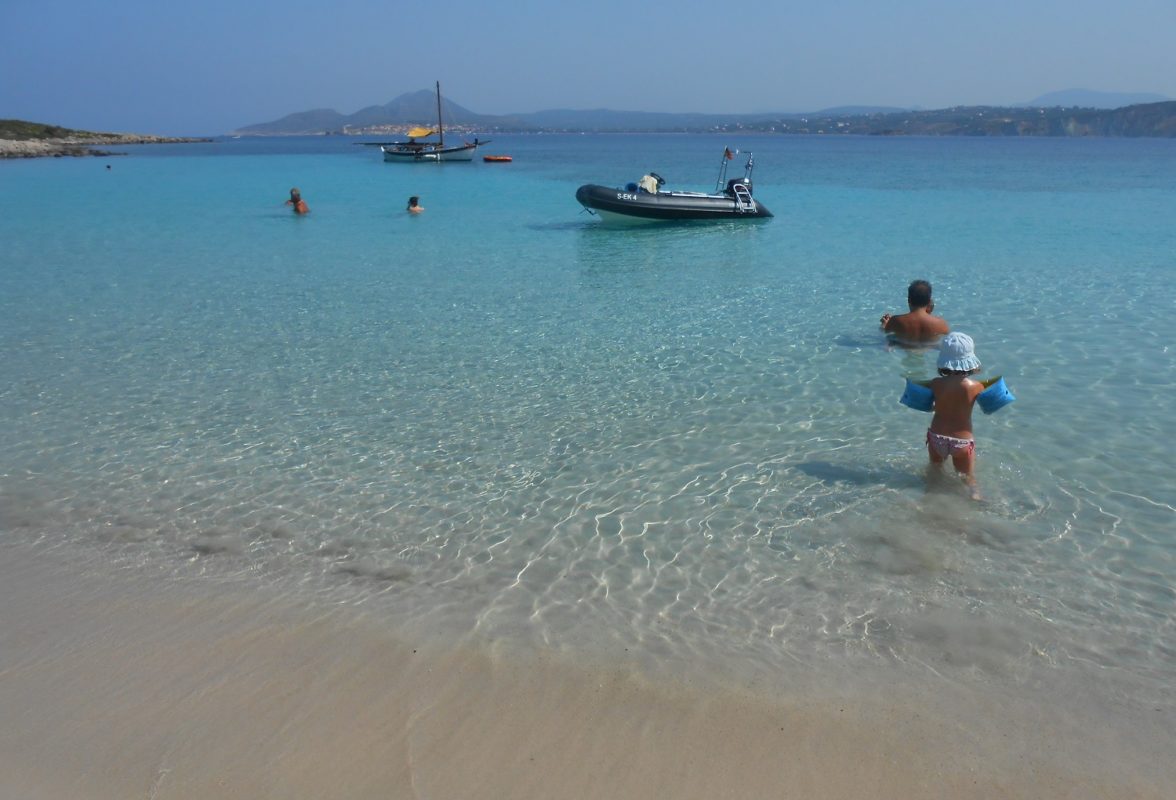
The waters around Messenia hide islands with their own mythologies. Proti Island, named after the sea god Proteus, resembles a crocodile when approached from the sea. Sailing there from Marathopoli harbor brings you to shores where pirate stories linger in caves and shipwrecks create underwater museums for those who snorkel. Vourlia Beach spreads in soft sand, and the day unfolds as you want it—fishing, swimming, hiking for Ionian views, or simply lying in sun with a cold drink.
Sfaktiria Island holds decisive history; this is where the Battle of Navarino unfolded, a pivotal moment in the Greek War of Independence, where you can still see remnants of that naval conflict. Boat trips here accommodate larger groups, three hours of swimming in crystalline water, exploring historical landmarks on an island that witnessed epic battles.



Castles That Tell Centuries
Some days need no guides or reservations—just a car, curiosity, and time. The castle route through Messenia reveals layers of history through three spectacular fortresses.
Pylos’ Niokastro Castle houses museums displaying archaeological treasures and underwater antiquities. Methoni‘s Venetian Castle stretches into the sea like a stone ship, its beach shallow and protected, its walls creating spaces where children’s imaginations turn them into knights and princesses.
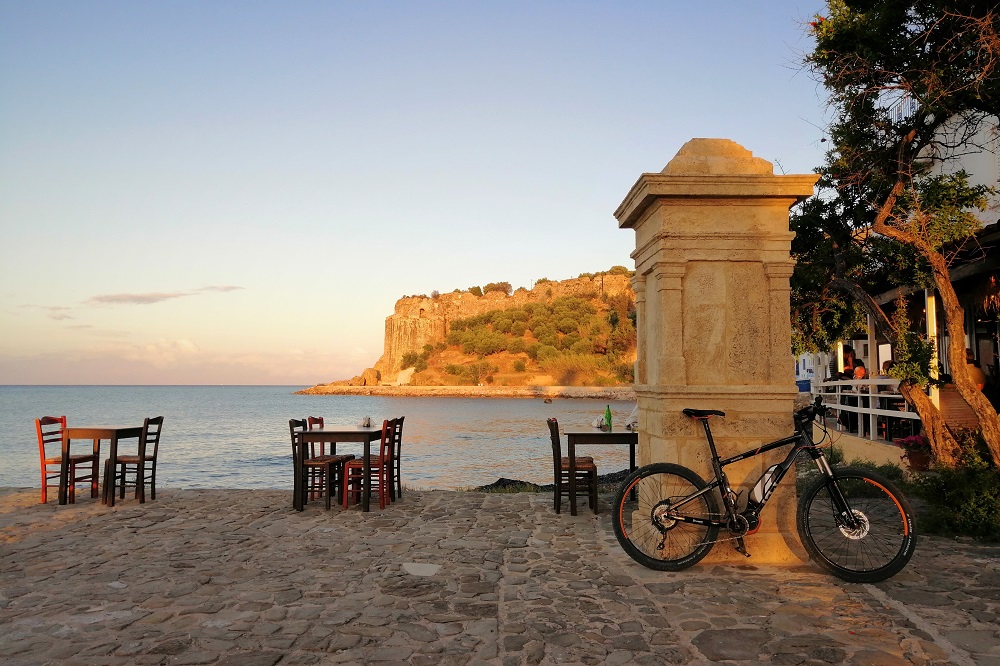
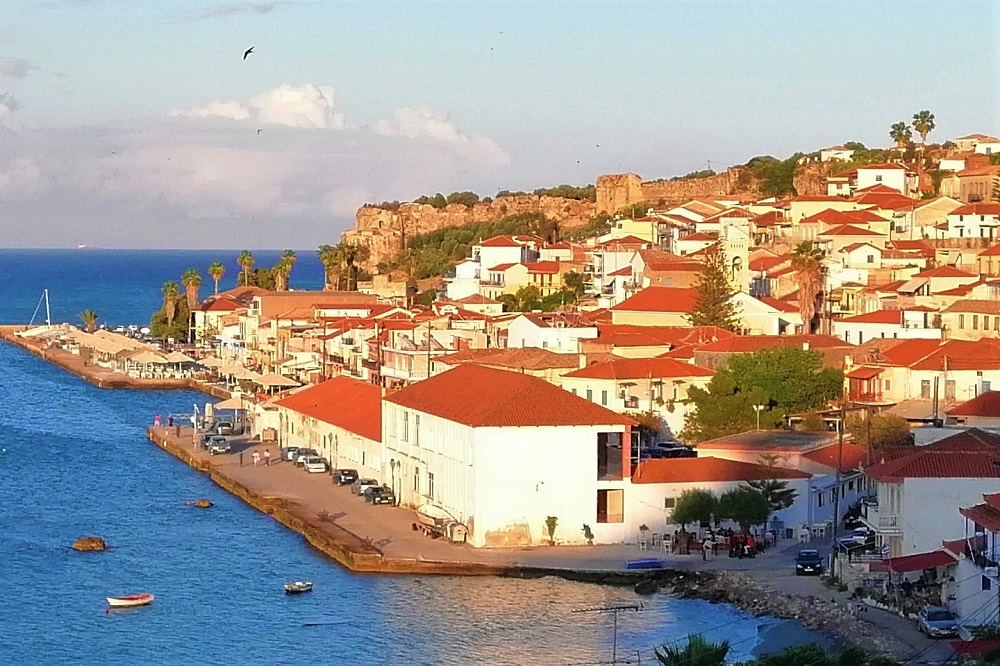
Koroni Castle lives and breathes—people actually reside within its walls, maintaining homes and a church in this medieval structure. Afterward, the waterfront tavernas serve spaghetti with lobster, a local specialty.


Moving Through This Landscape Thoughtfully
Nolan’s film will bring attention to Messenia, which brings both opportunity and responsibility. This land has remained relatively untouched not by accident but because locals have chosen to maintain the rhythms of agriculture that have sustained communities for millennia. As travelers arrive seeking Homer’s landscapes, the question becomes: how do we experience this place in ways that honor rather than overwhelm it?
There’s no single answer. Some families need activity every day, kayaking, hiking, exploring. Others need rhythm: active morning, lazy afternoon, sunset swim. Some children thrive on cultural immersion; others need unstructured time to simply be children, building sand kingdoms and collecting shells. The key is moving slowly enough to notice—the way light changes through the day, how locals greet each other in village squares, what foods appear at different times of year, the depth of conversation when people discuss their olive oil with that remarkably specific vocabulary.
As someone who grew up here and has watched these beaches and castles through decades, I’ve learned that the most meaningful experiences come from being present to small moments. The scent of olive flowers drifting on spring air. Children’s laughter echoing in a Venetian castle. The way locals lean in when explaining the subtle differences between this year’s harvest and last year’s. That’s what Messenia offers. The landscapes that inspired Homer still inspire us today, because they continue to live and breathe and sustain the people who call them home.
Ready to begin your own family Odyssey? Fill in this form and let’s craft your personalized Messenia adventure.